Could grant funding help your school build its next playground?
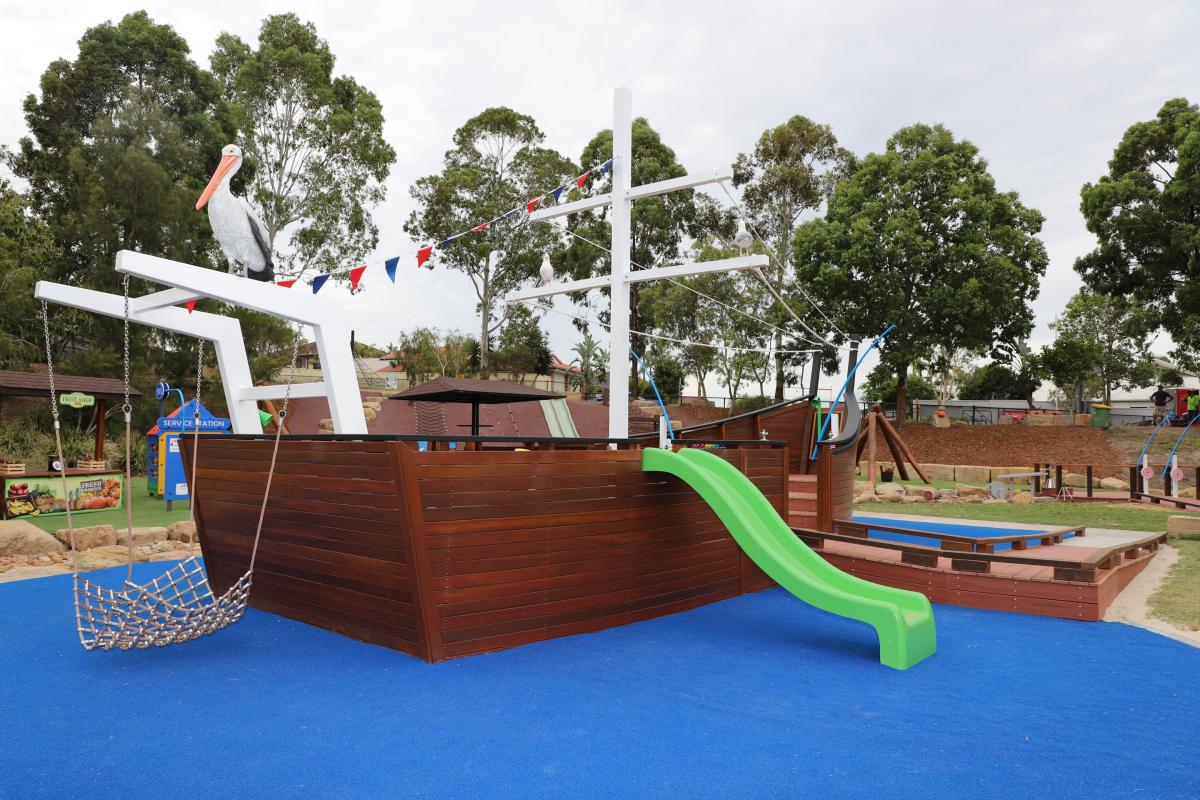
For many schools, the vision for a better playground already exists.
The challenge is finding the funding to make it happen.
Across Queensland and New South Wales, several government and community grant programs can contribute towards playgrounds, inclusive play spaces, outdoor learning areas and associated infrastructure. However, schools often miss these opportunities because they begin looking for funding before the project has been properly defined.
The strongest applications start with a clear plan.
Funding opportunities for Queensland schools
Gambling Community Benefit Fund
Queensland’s Gambling Community Benefit Fund is one of the most useful programs for incorporated P&Cs and other eligible not-for-profit organisations.
Standard rounds have previously provided grants of up to $35,000, with occasional super rounds offering up to $100,000.
Although this may not fund an entire playground, it could help deliver a clearly defined component, such as:
- an inclusive play element;
- a sensory or quiet-play space;
- accessible pathways;
- a nature-play area;
- shade and seating; or
- a junior climbing and activity zone.
For many schools, the P&C may be the most appropriate applicant. The organisation must meet the fund’s eligibility requirements and demonstrate a clear benefit to the community.
Capital assistance for non-state schools
Queensland Catholic and independent schools may also be able to access capital assistance through state and Australian Government programs.
These programs generally prioritise schools that can demonstrate genuine infrastructure need and limited capacity to fund the work independently.
A playground proposal will usually be stronger when it is connected to broader educational outcomes, including:
- inclusive access;
- student wellbeing;
- outdoor learning;
- enrolment growth;
- special education needs;
- improved supervision; and
- replacement of infrastructure that is no longer safe or suitable.
Applications are generally made through the school’s relevant approved authority or Block Grant Authority.
Queensland state schools
The Queensland Playgrounds and Tuckshops Upgrade Program provided significant funding to selected state schools between 2023 and 2026. That particular program has now reached the end of its delivery period, but it demonstrated that playground infrastructure remains an important government investment area.
State schools should continue discussing identified playground needs with their regional infrastructure representatives and ensure projects are documented in their longer-term infrastructure and asset planning.
Funding opportunities for NSW schools
ClubGRANTS Category 3 Infrastructure Grants
The NSW ClubGRANTS Category 3 Sport and Recreation Infrastructure program is one of the most significant potential funding sources for playground projects.
Grants range from $50,000 to $300,000, and playgrounds are specifically identified as eligible recreation infrastructure.
Schools can apply, but there is an important condition: the application must address how the new infrastructure will be accessible to the public outside school hours.
This makes the program particularly relevant to schools prepared to create a genuine shared community facility.
A strong application may include:
- weekend or school-holiday access;
- inclusive equipment for children with disability;
- partnerships with community organisations;
- facilities supporting disadvantaged families;
- evidence of community consultation; and
- a clear plan for ongoing maintenance and management.
The current round closes on 17 August 2026, so schools considering an application will need to move quickly.
Community Building Partnership
The NSW Community Building Partnership program provides between $10,000 and $100,000 for local community infrastructure.
Registered NSW P&C associations are eligible applicants, making this a valuable pathway for school playground projects.
The 2026 round has closed, but schools can begin preparing for future rounds now.
Applications are assessed on their ability to strengthen community wellbeing, deliver value for money and demonstrate that the applicant can successfully deliver the project.
A playground designed around inclusion, community access, student wellbeing and opportunities for children of different ages and abilities is likely to present a stronger case than a simple request to replace old equipment.
For projects on NSW Department of Education land, the appropriate Asset Management Unit approval will also be required.
Capital assistance for non-government schools
NSW Catholic and independent schools may be eligible for state and Australian Government capital funding.
As in Queensland, funding is generally prioritised according to educational need, financial need, enrolment pressures and the school’s ability to fund the project.
Playground projects should therefore be positioned as essential educational infrastructure—not simply an amenity.
The application should explain how the project will support learning, wellbeing, inclusion, physical development, supervision and the school’s future growth.
Start with a master plan—not a grant application
One of the most common mistakes schools make is applying for funding before the playground has been properly planned.
Grant assessors need more than a good idea. They need confidence that the project is necessary, achievable and ready to be delivered.
Before applying, a school should ideally have:
- a documented statement of need;
- a playground master plan;
- a clearly defined project scope;
- concept plans and visualisations;
- a realistic preliminary budget;
- staged funding options;
- evidence of consultation with students, staff and families;
- an inclusive-design strategy;
- landowner and departmental approvals;
- an ongoing maintenance plan; and
- evidence that safety, supervision and relevant Australian Standards have been considered.
This planning also allows a large playground to be divided into smaller, grant-ready stages.
For example, a school may seek one grant for accessible pathways and inclusive equipment, use P&C funds for shade and seating, secure sponsorship for a nature-play area and allocate school capital funding to the main adventure-play structure.
Design the project around outcomes
Successful grant applications do not focus only on equipment.
They focus on what the project will change.
Will children with disability be able to participate more fully?
Will students who find busy playgrounds overwhelming have somewhere quieter to play?
Will the playground improve physical activity, social connection and student wellbeing?
Will the design provide better supervision and safer movement?
Will the wider community be able to use the space?
The playground is the infrastructure. The outcomes are the reason it deserves funding.
At Everything Outside, we help schools turn an early playground idea into a considered, staged and grant-ready master plan.
That means developing the design, scope, visualisations and realistic budget schools need to approach funding with confidence.
Because the right grant can help—but the right plan must come first.
If you are looking to start a new school playground project, Andrew can be reached on 07 5607 0587 or email info@everythingoutside.com.au
Related posts
Don’t approve a new playground until you ask these questions
Adventure playgrounds
Inclusive playgrounds
Parkour playgrounds
A school playground proposal can look impressive in a presentation while leaving important issues unresolved. Before approving a design, school leaders should be confident that safety, compliance, supervision and long-term maintenance have been considered by the designer from the beginning—not added as an afterthought.
If your playground needs more teachers on duty, is it poorly designed?
Adventure playgrounds
Inclusive playgrounds
Parkour playgrounds
When school playground incidents increase, the usual response is to add another teacher to the duty roster. But is that solving the problem long term—or compensating for the design of the playground?
Could the playground be the reason a parent chooses your school?
Adventure playgrounds
Inclusive playgrounds
Nature play
Outdoor classrooms
Parkour playgrounds
When parents are comparing schools for their prospective Prep child, many of the fundamentals can appear similar. Strong academic programs. Caring teachers. Clear values. Welcoming communities. So, what ultimately swings their decision?