Don’t approve a new playground until you ask these questions
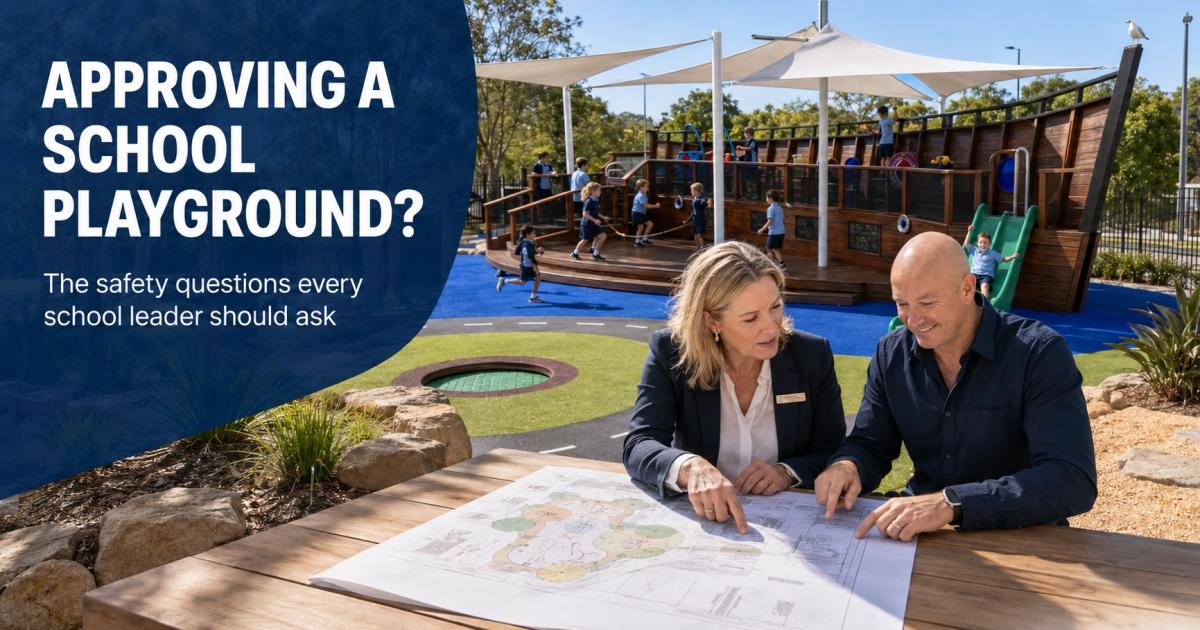
A school playground proposal can look impressive in a presentation while leaving important issues unresolved. Before approving a design, school leaders should be confident that safety, compliance, supervision and long-term maintenance have been considered by the designer from the beginning—not added as an afterthought.
Here are my biggest tips to help you understand the Australian Playground Safety Standards.
1. “Compliant equipment” does not automatically mean a compliant playground
This is one of the most important distinctions.
An individual slide, swing or climbing unit may have been designed to meet the relevant standard. However, the complete playground must also be assessed as an interconnected environment.
Its layout, installation, surfacing, fall zones, landscaping and proximity to other structures can all affect compliance.
So ask your designer:
Will the entire completed playground be assessed—not just the individual pieces of equipment?
2. Fall zones are not simply spare space around equipment
The higher a child can fall, the more carefully the surrounding area and impact-attenuating surface must be considered.
Fall zones can also interact. Moving equipment such as swings and track rides needs particular attention because children may run into its path. Slides need safe entry, transition and run-out areas. Climbing equipment must be positioned so a fall does not introduce another hazard.
A skilled playground designer calculates these requirements while developing the layout. They should never be squeezed in at the end because the design has run out of space.
3. Softfall must suit the potential fall height
Artificial grass, rubber surfacing and loose-fill materials are not automatically compliant simply because they are marketed for playground use.
The complete surfacing system must provide the required impact attenuation for the equipment and its free height of fall.
The current surfacing standard is AS 4422:2022, which covers playground surfacing specifications, requirements and testing. The Queensland Department of Education also advises that post-installation testing should verify that new surfaces conform before a playground opens. Queensland Department of Education
School leaders should ask:
-
What surface system has been specified?
-
What fall heights has it been designed for?
-
What testing or certification will be supplied?
-
How must the surface be maintained?
-
Will future impact testing be required?
Softfall is a safety system—not merely a finishing material or colour choice.
4. Entrapment risks can be difficult to see
Children explore equipment in ways adults may not anticipate.
Gaps, openings, rails, ropes and changes between components must be assessed for potential head, neck, finger, clothing and body entrapment. Protrusions, sharp edges, pinch points and items that could catch clothing also require careful attention.
These risks are one reason playground design should be undertaken by someone who understands the standards—not simply someone who can produce an attractive concept image.
A beautiful design must still work safely at child scale.
5. Supervision should influence the layout
Compliance is not only about measurements.
The playground must also work within the daily life of the school. Teachers need clear sightlines, sensible entry and exit points, and the ability to see across active and quiet areas.
Fast-moving play should not create unnecessary conflicts with gathering spaces or major pathways. Hidden spaces can support imagination and self-regulation, but their design must still allow appropriate supervision.
The Queensland Department of Education specifically identifies line of sight, age appropriateness, supervision, layout and equipment combinations as matters to consider when planning a new or refurbished playground. Making Playground Equipment Safe
6. Age-appropriate does not mean challenge-free
The purpose of the standards is not to remove all challenge from playgrounds.
Children need opportunities to climb, balance, test their judgement and develop confidence. A well-designed playground allows them to experience manageable risk without being exposed to hazards they cannot reasonably recognise.
The designer should consider the age, reach, grip strength, physical development and likely behaviour of the intended users.
A Prep playground should not simply be a smaller version of a senior-primary playground. Each should respond to the abilities and needs of the children using it.
7. Accessibility requires more than an accessible entrance
A pathway into the playground is a good start, but it does not necessarily create an inclusive play experience.
Ask what children of different physical, sensory and cognitive abilities will be able to do once they arrive.
Can they participate with their peers? Are there activities at different heights? Are there sensory and quiet-play choices? Can children move through the space in more than one way?
True inclusion should be part of the design brief from the beginning—not a single accessible element added to an otherwise inaccessible playground.
8. Independent commissioning matters
Before students use a major new playground, the completed installation should be inspected by a suitably competent playground inspector.
This inspection considers what was actually built—not merely what appeared on the approved drawings. It can identify installation issues, surfacing concerns or changes made during construction.
Ask your supplier to clearly identify:
-
Who will inspect the completed playground?
-
What qualifications or competencies do they hold?
-
Is the inspection independent of the construction team?
-
Will the school receive a written report?
-
Will any issues be rectified before handover?
The Queensland Department of Education’s current guidance calls for new installations to be inspected and tested before first use to verify conformity with the relevant parts of the AS 4685 series and AS 4422. Queensland Department of Education
9. Compliance does not finish on opening day
A playground can be compliant when it opens and become unsafe if it is not properly inspected and maintained.
Connections can loosen. Timber can deteriorate. Moving parts can wear. Loose-fill surfacing can disperse. Synthetic and rubber surfaces can change over time. Landscaping can grow into fall zones, and modifications made later may create new hazards.
Schools should receive an inspection and maintenance plan as part of handover.
That plan should cover routine visual checks, operational inspections, comprehensive inspections, surfacing requirements, repairs and record keeping.
The Queensland Department of Education recommends a comprehensive annual inspection by a competent person. Its guidance also makes an essential point: equipment considered safe when commissioned must be kept safe through scheduled inspection and maintenance.
The most important question every school leader should ask
Before approving a playground, ask:
Can the designer show us how safety, compliance, supervision, inclusion, maintenance and play value have shaped this design?
If you need help with a playground design, give Andrew a call on 07 5607 0587 or email info@everythingoutside.com.au
Related posts
Before you choose playground equipment, finish this sentence…
Adventure playgrounds
Inclusive playgrounds
Parkour playgrounds
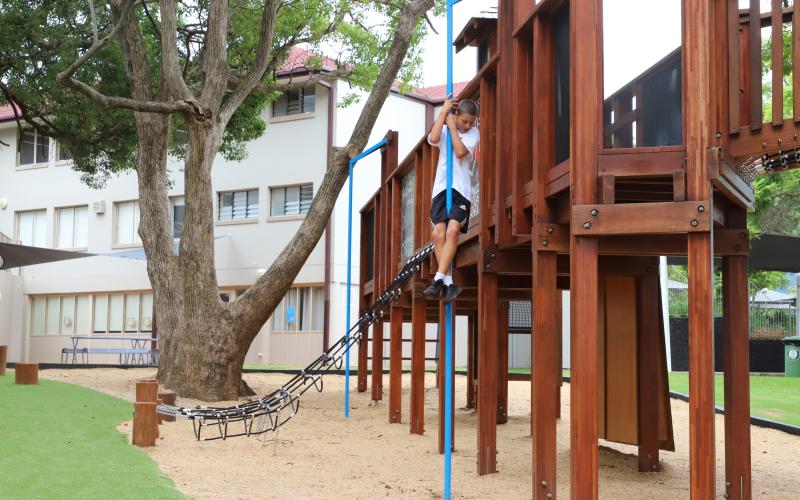
“Our new playground needs to help our students…” If you’re a principal or school business manager planning a playground, I’d start there. I totally understand the temptation to jump straight into the exciting part. Towers, slides, rope bridges, water play. Photos of impressive playgrounds. A wish list of everything you’d love to include.
If I ask you to wait, it should give you confidence.
Adventure playgrounds
Inclusive playgrounds
Parkour playgrounds
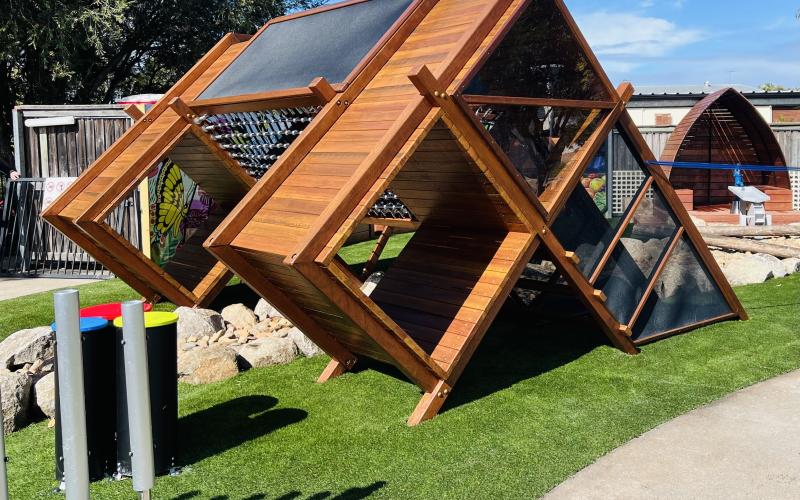
A long playground pipeline isn’t a warning sign. It’s a vote of confidence. When a school decides it needs a new playground, the first question I often get is:“How quickly can you start?” But perhaps a better question is: “When should we begin planning?”
If your playground needs more teachers on duty, is it poorly designed?
Adventure playgrounds
Inclusive playgrounds
Parkour playgrounds
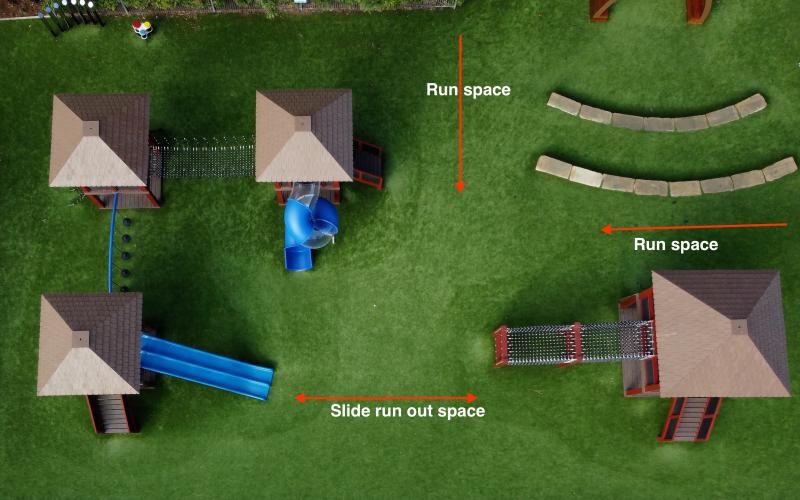
When school playground incidents increase, the usual response is to add another teacher to the duty roster. But is that solving the problem long term—or compensating for the design of the playground?